ACE funded project collaborating with Prof Jan Zalasievicz and Prof Sarah Gabbot.
At a recent creative residency, I was introduced to the concept of Technofossils, a term coined by Professor Jan Zalasiewicz and colleagues at the University of Leicester to describe the geological footprints that humans will leave behind through their material goods. The vast majority of human artefacts will be hardened in another geological layer before getting the opportunity to decompose and disappear, which will result in unprecedented future geologies. Landfill in particular, will provide the perfect conditions for novel geologies and will be our lasting legacy.
This is a new area of study, but one which is increasingly important in the context of the climate emergency and a move towards more sustainable approaches to materials. As a species, humans are changing the earth’s crust and things we do today will remain in the rocks and sediments for perpetuity.
I reached out to Jan and Sarah after reading their book Discarded as part of my research during a residency at MOLA. It their book they cover in some detail some of the processed and transformations that our rubbish is likely to undergo in the future and what future geological strata might be like.
I have started collecting research objects that begin to tell a story about out relationship with the ground below us and hint at some of the unpredictable outcomes of geological processes. This collection is currently on show at Gyeonggi Ceramics Biennale in South Korea:
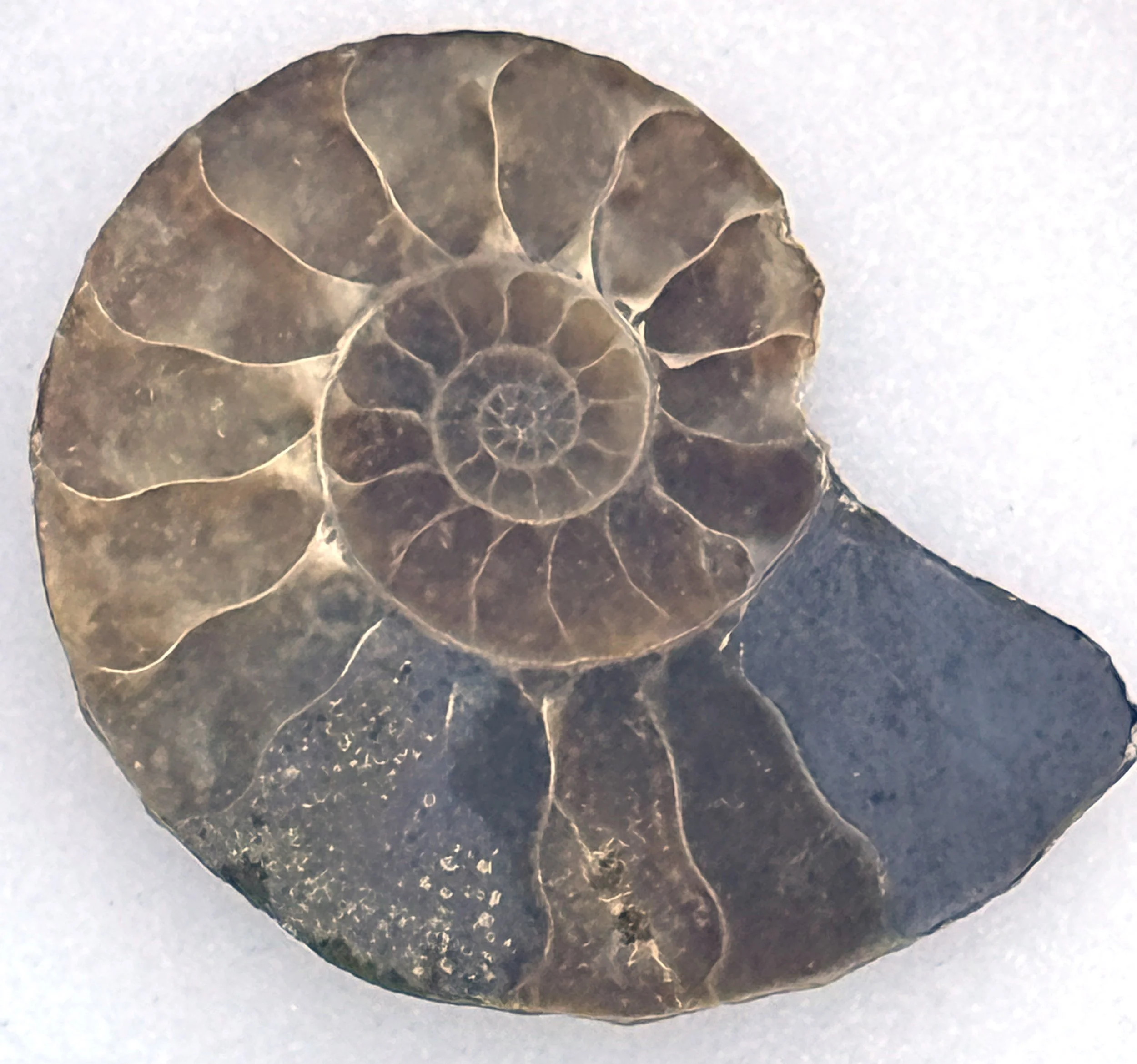
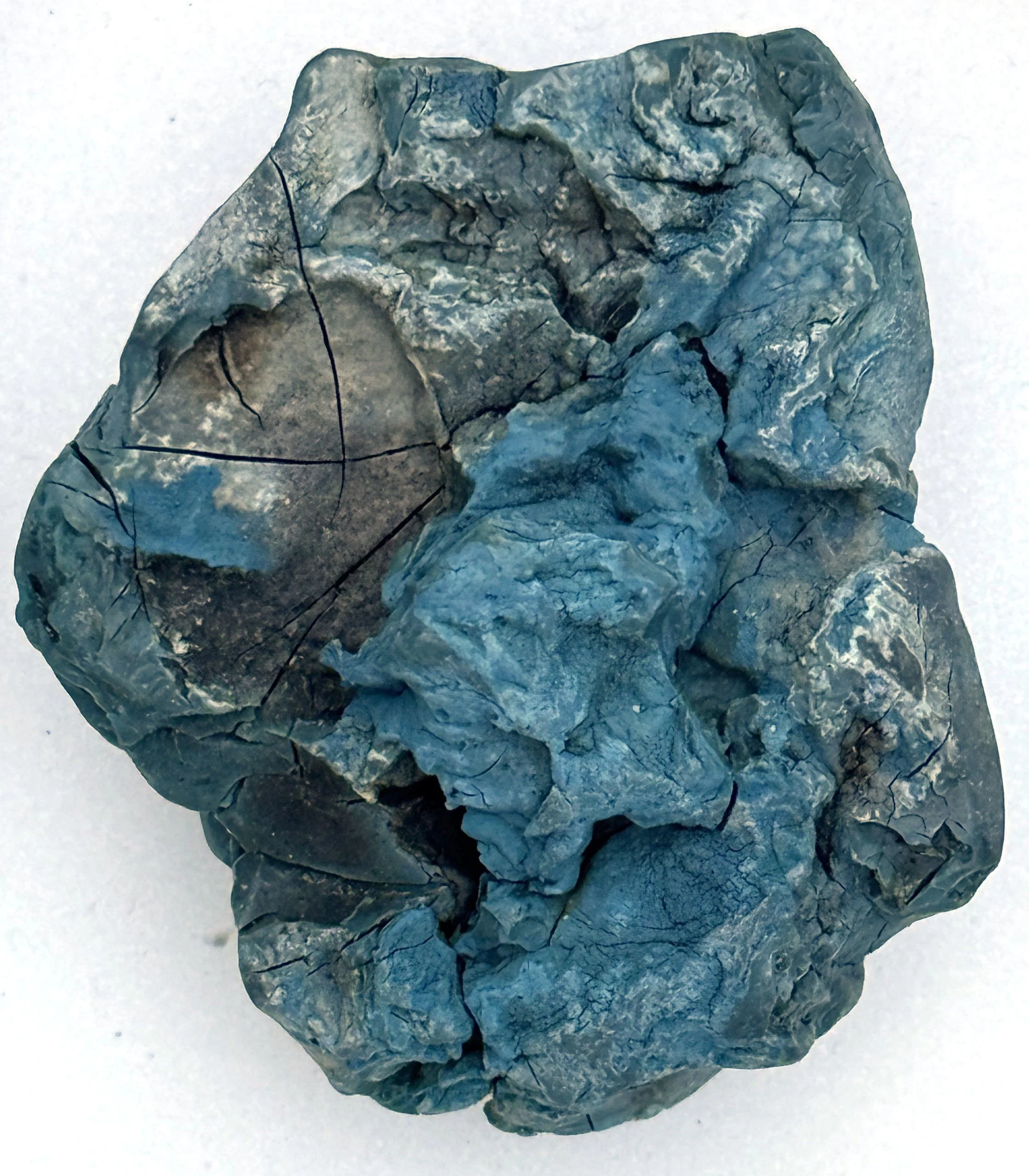
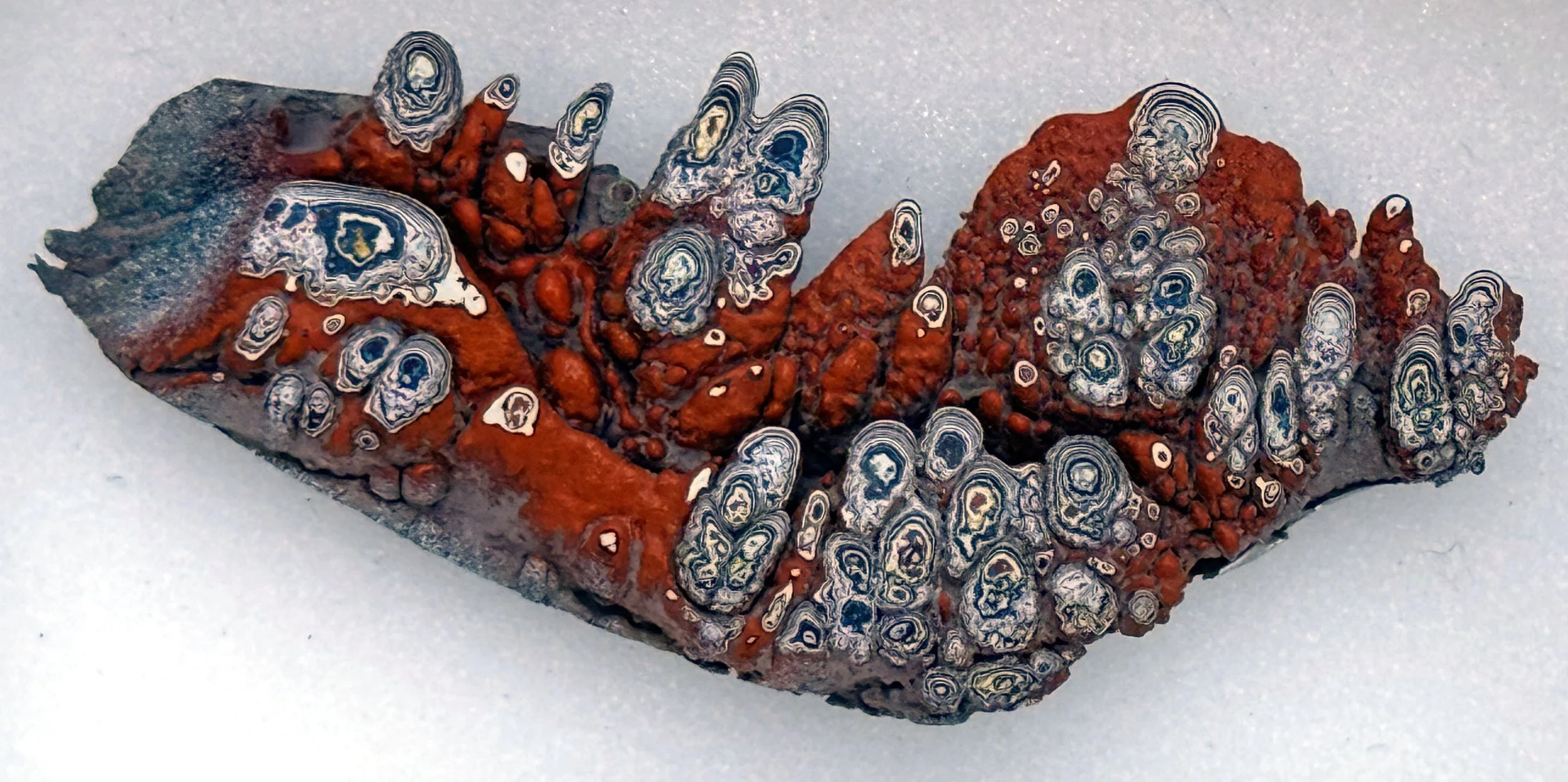
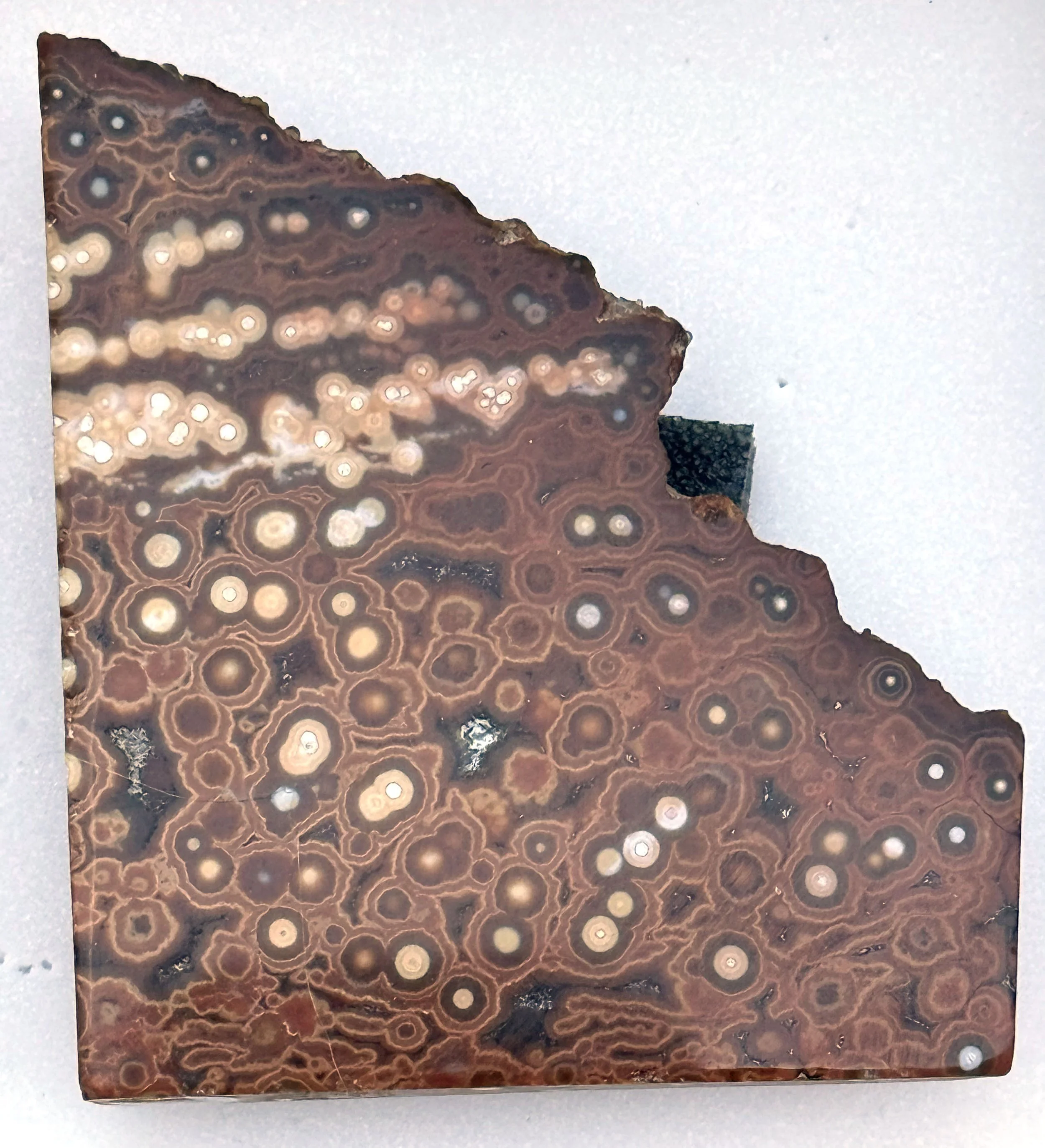
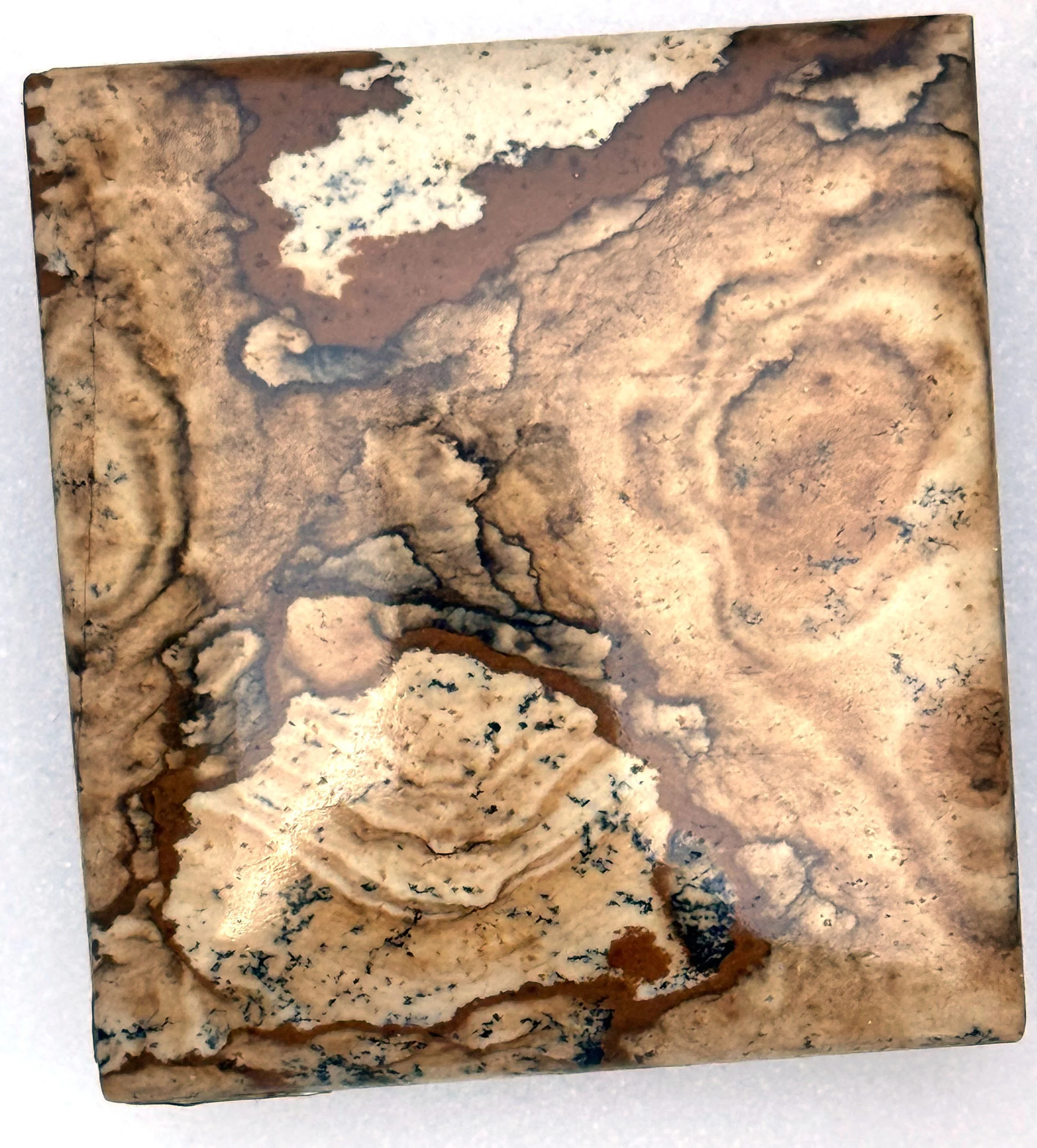
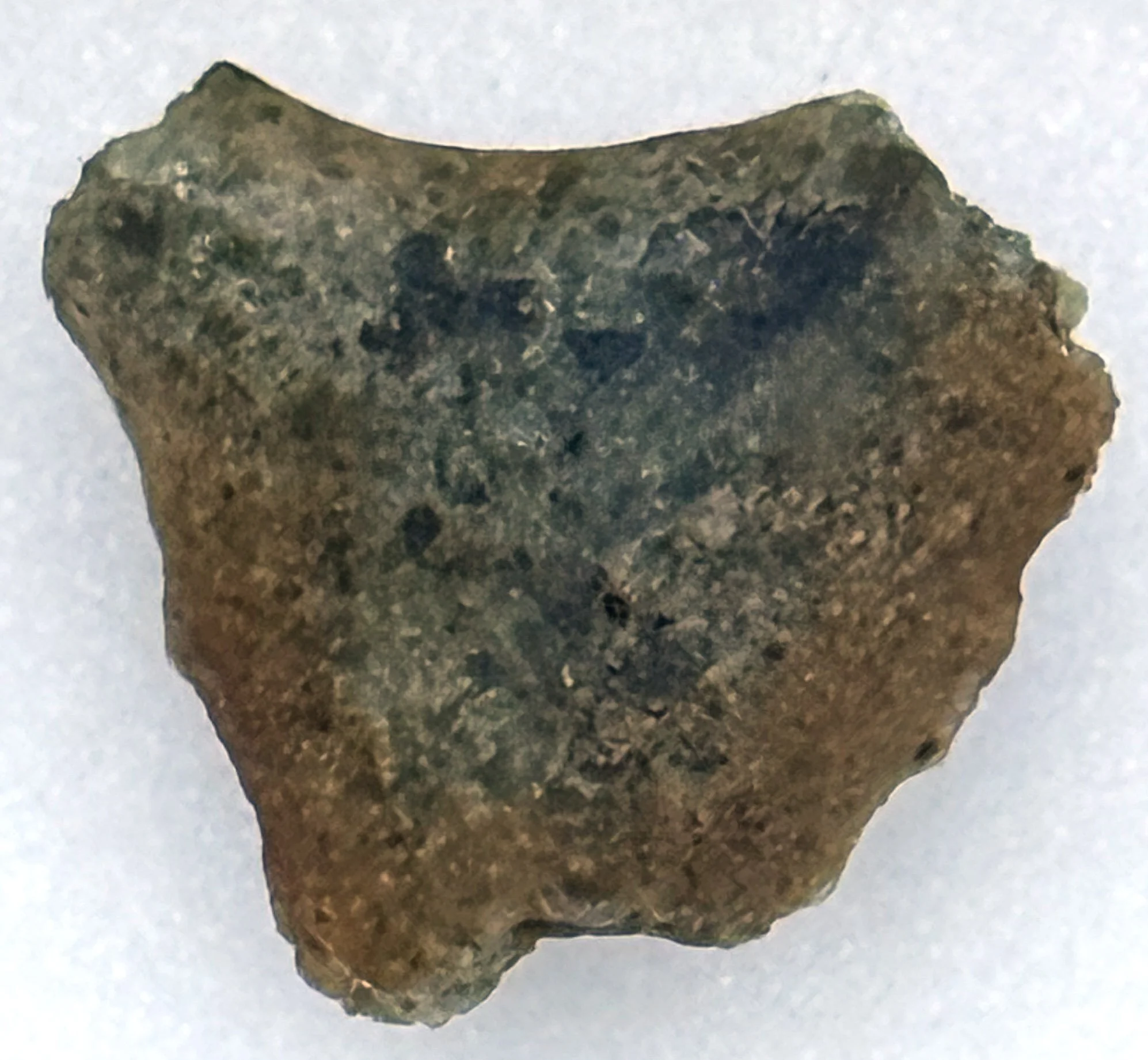
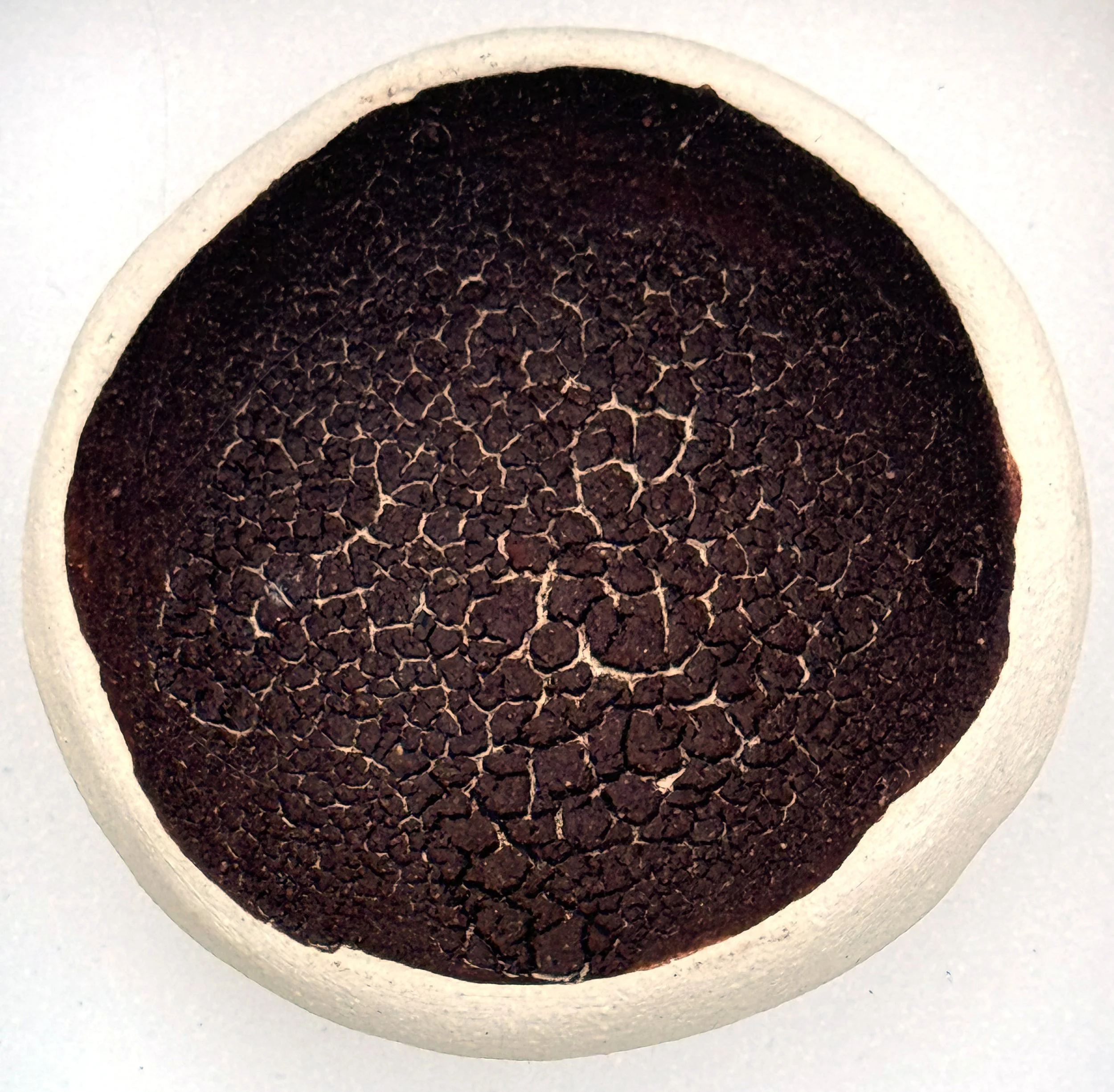
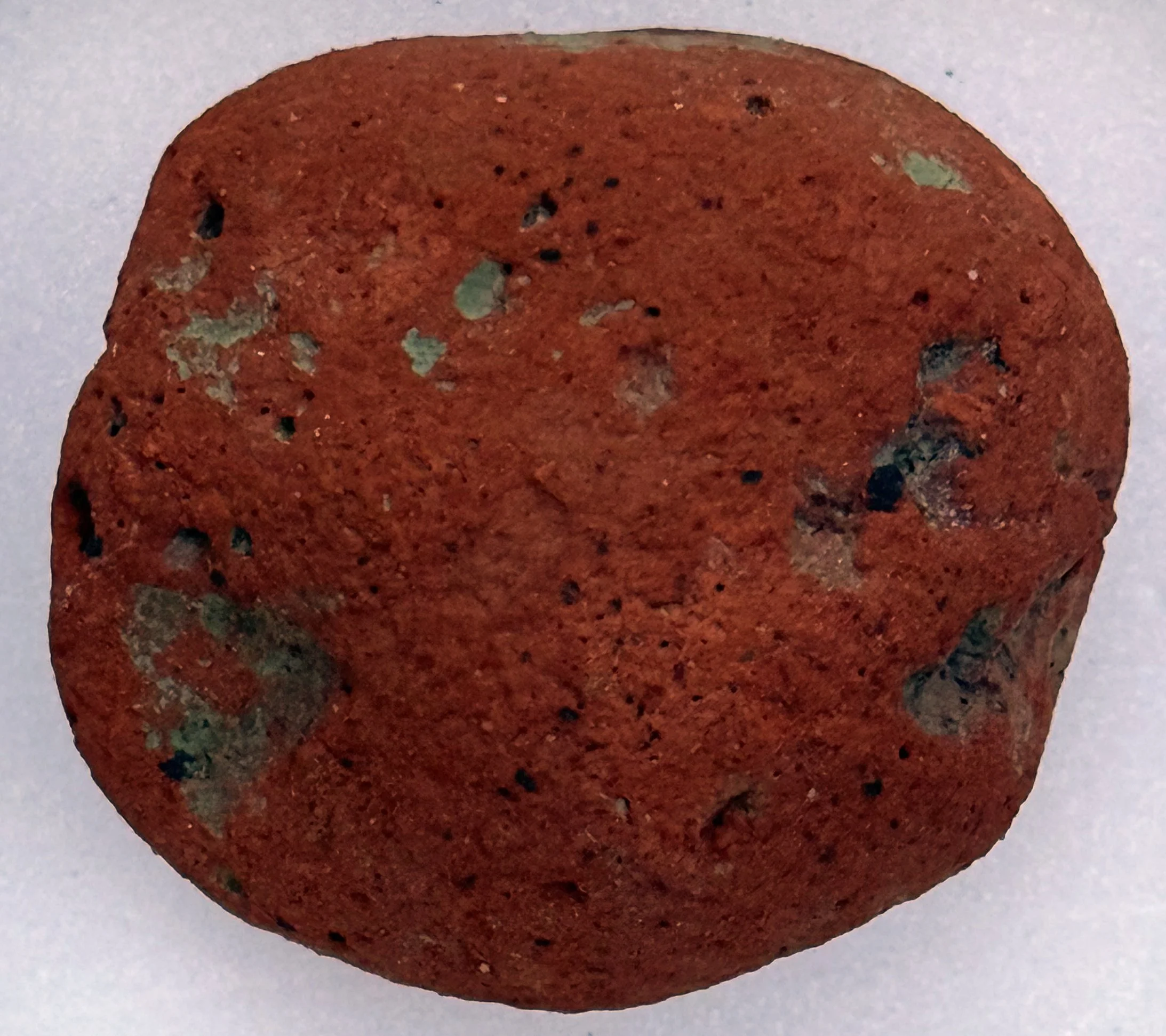
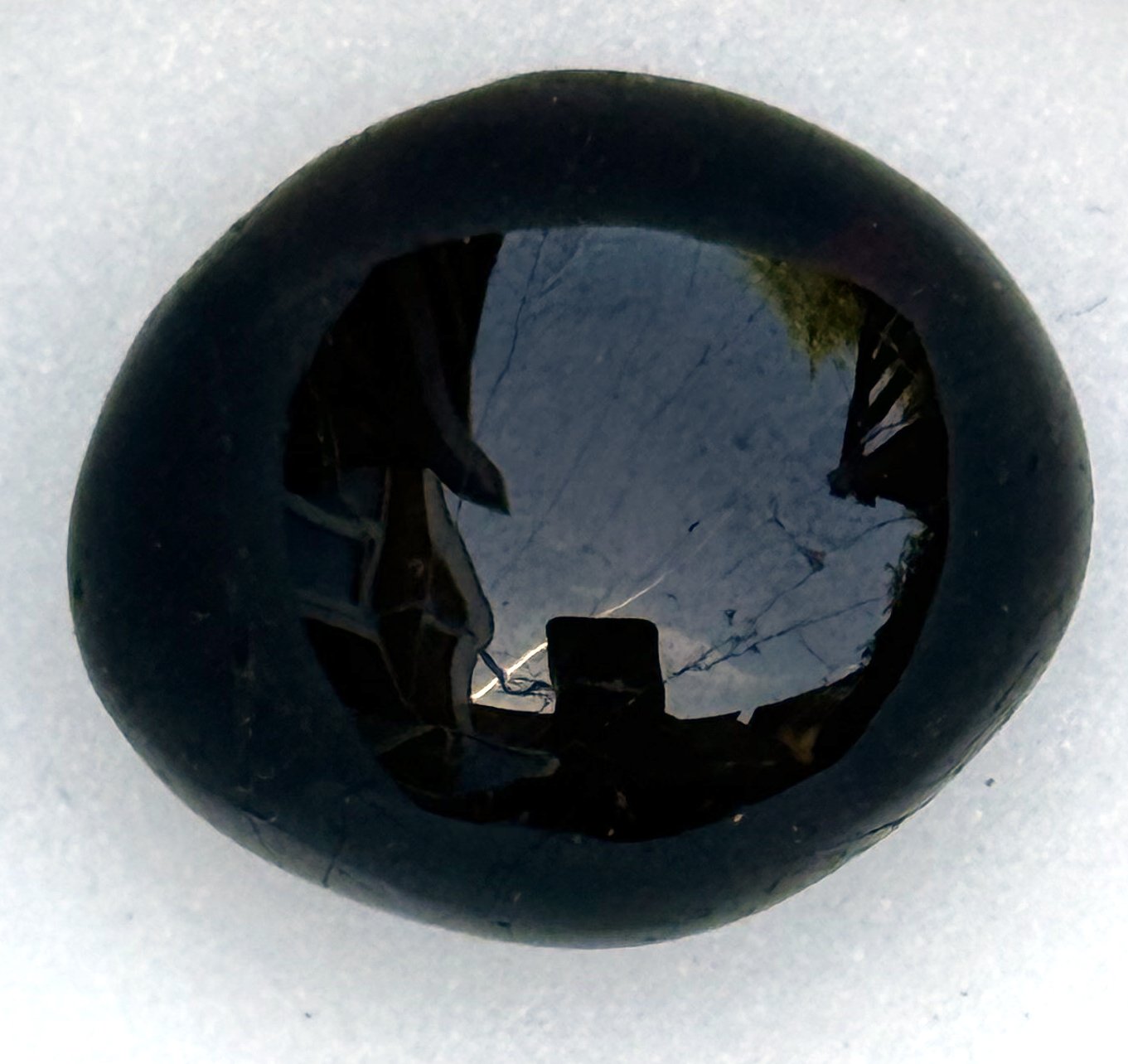
1. Polished ammonite fossil.
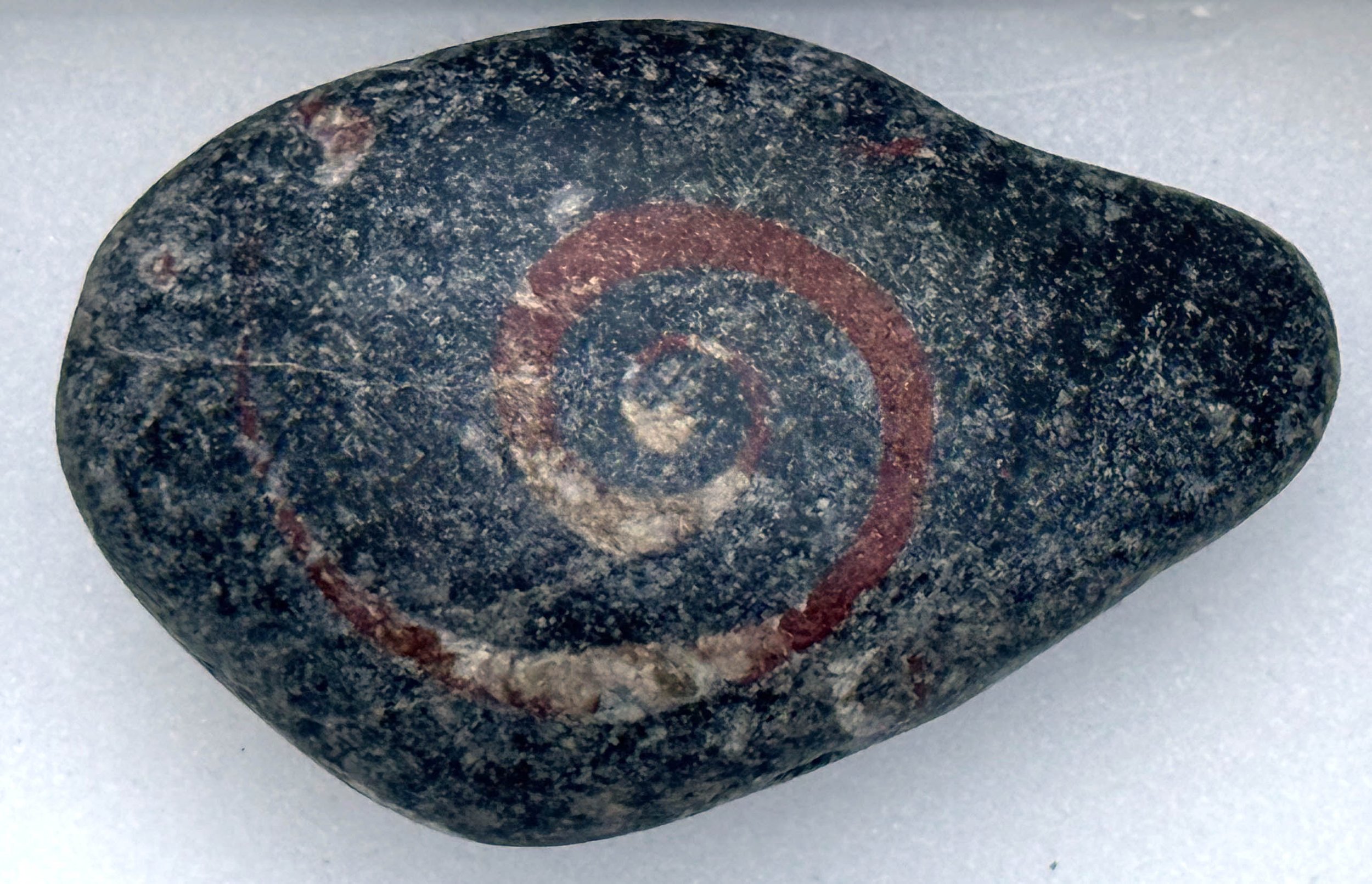
2. Pebble showing spiral pattern found on Rhossili Bay Beach, Wales, UK
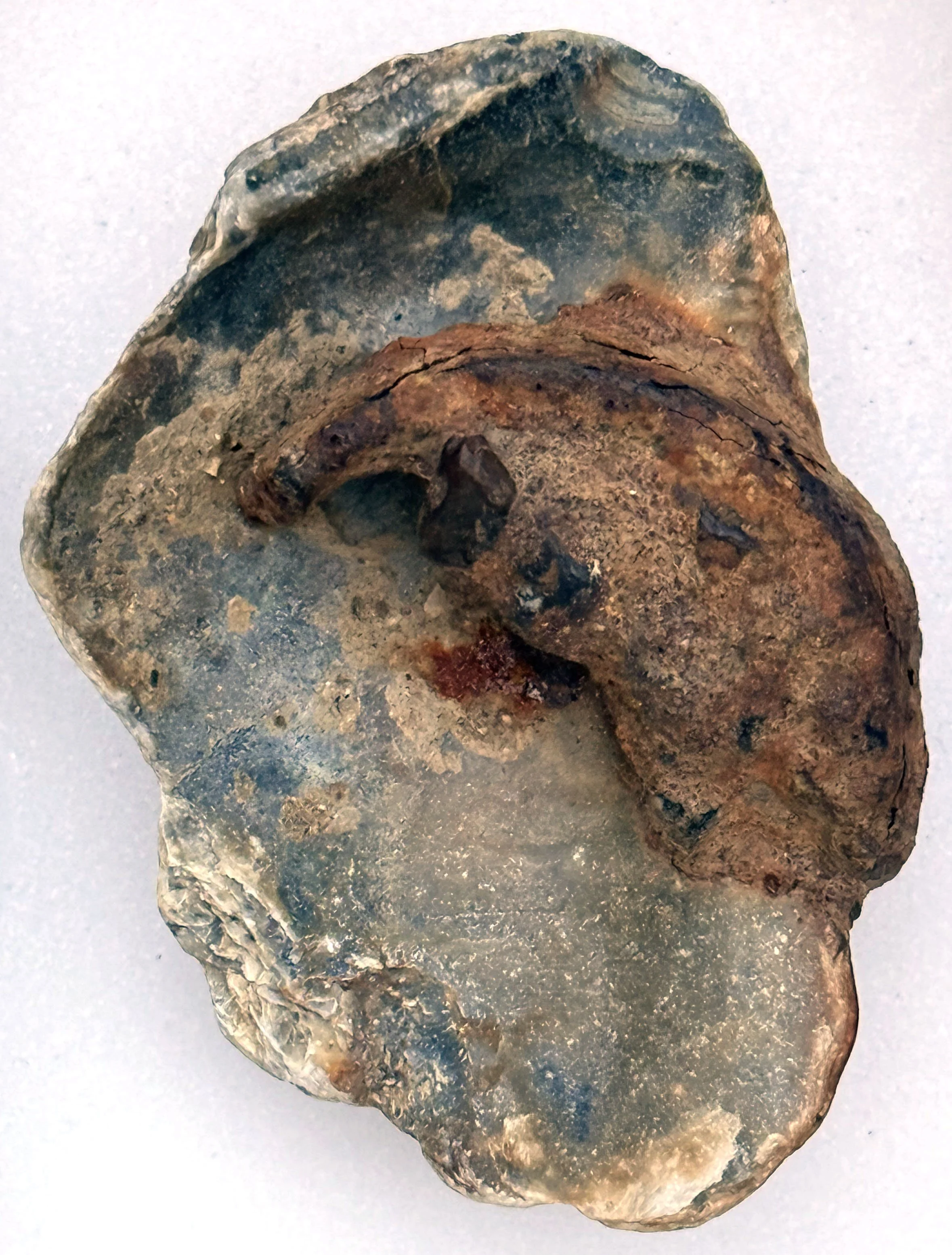
3. Iron object, fused to oyster shell, found on Camber Sands, UK
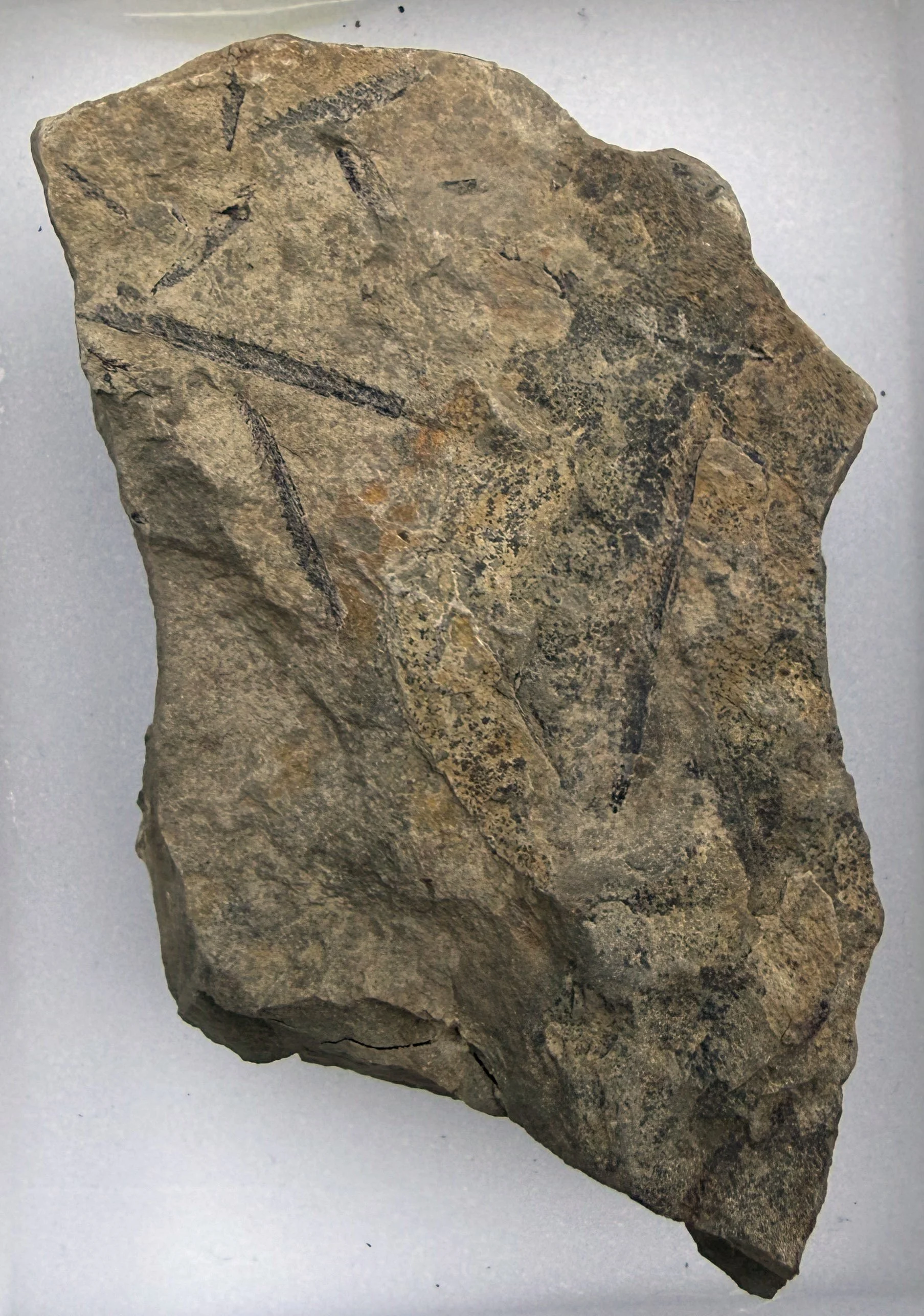
4. Mudstone from the Welsh Borders area (a sea floor clay from late Silurian times, about 425 million years ago). The matchstick-sized dark impressions that look like the ghosts of little fretsaw blades are fossil graptolites (extinct planktonic colonies), which were originally made of an organic substance, but then converted to an aliphatic polymer - a plastic-like substance - during burial, and has been preserved ever since as blackened and carbonized relics. They are a fair analogy of what might happen to our small plastic objects (such as cotton bud stems) that are buried in modern strata.
5. Weathered pyroplastic, a newly categorised form of plastic pollution that was transformed by fire, most likely beach campfires or burning at old landfill sites. Colours and edges are often dulled, making it virtually indistinguishable from beach pebbles. Folkestone beach, UK
6. Fordite (also known as Detroit agate or Motor City agate). A unique, man-made material, formed from layers of hardened automotive enamel paint. It was created in Detroit, USA in the 1940-80s, when cars were sprayed by hand, from the overspray that accumulated on factory paint tracks and was repeatedly baked in curing ovens, resulting in rock-like, geological formations. Boatite is a similar formation, predominantly white in colour, created when spray-painting yachts.
7. River Jasper is a natural, opaque chalcedony with fluid or orbicular patterns. It was formed by mineral-rich water flowing through rock over millions of years. Jasper often forms when loose sediments become cemented together. This occurs as groundwater rich in silica and iron seeps into sedimentary layers and evaporates, leaving behind silica that acts as a natural glue, binding the particles together.
8. Landscape Jasper is a type of mudstone, which features layered mineral deposits that create landscape-like patterns. Mudstone is a fine-grained sedimentary rock composed of mud and clay. The type of sediment influences the stone's final colour, while natural forces, such as water or wind, helps create the patterns. In some cases, volcanic ash contributes to the formation.
9. Trinitite, atomic bomb glass. Impact glass formed from the first ever atomic bomb detonation at the Trinity Test Site, New Mexico. Formed July 16th 1945 at 5.29 am.
10. London Eocene (approximately 50 million years old) clay, fired at 1150 degrees C
11. Weathered brick, washed up on Thames River shore, Southbank, London, UK
12. Garnet. A possible future outcome of brick buildings. As bricks become buried deep below the Earth’s surface over millions over years under enormous pressure and heat, the clay minerals may start to slowly grow larger, forming bands of mica and deep red garnet crystals.
During my visit to the Biennale I visited KIGAM and the Centre for the Anthropocene at KAIST, both scientific research facilities looking into the Anthropocene and ways that
My own palaeontological/sedimentological reflexes would be, rather than (or as well as) to try to squash/heat them (we have an idea roughly how they will respond), is to think of how widely they might be carried by water and where they will end up. The lighter ones will end up along shorelines, like pumice, but the denser plastics should sink into deeper sedimentary environments, so looking for nurdle hotspots or graveyards might have both artistic and scientific (and practical) value. And, nurdles are outwardly not too dissimilar to certain small rounded deep-time fossils such as nummulite foraminifera, ostracods and bradoriids, and plant megaspores. It would be intriguing to compare (or put side by side) rock slabs with such fossils and nurdle assemblages within their enclosing sediment (which one could capture and 'solidify', for instance, using resin casts). Perhaps something like that might be mused on?
Insert from my application
Neil Rose
AWG